
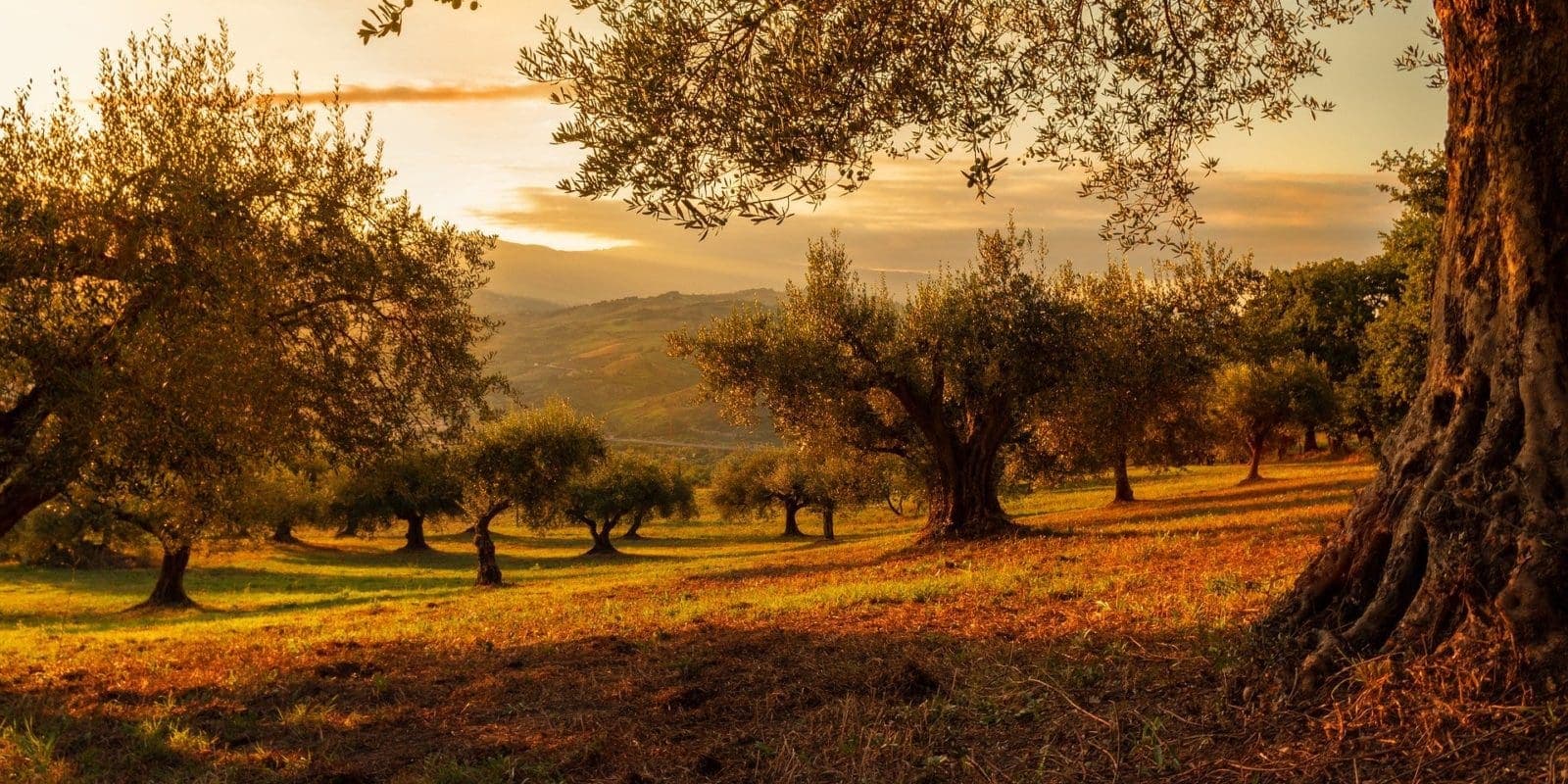
Lebanon’s olive culture deserves more than a borrowed Mediterranean shorthand. This guide separates verifiable context from easy marketing claims and shows how place, cultivar, process and documentation work together.
01
Begin with place, not a superlative
Lebanese olive oil is not one flavour, one cultivar or one production style. It is the result of orchards spread across coastal plains, inland valleys and mountain terraces, managed by growers working with different varieties, harvest decisions and milling conditions. That makes origin a useful starting point: ask who produced the oil, where the fruit grew, which cultivar was used and when the olives were milled.
The phrase ‘Lebanese olive oil’ identifies a country of origin, not an automatic quality grade. Extra virgin is a regulated classification with chemical and sensory requirements; it should not be treated as a decorative synonym for premium. A strong bottle therefore brings two kinds of information together: the official grade and the more particular story of place, producer and harvest.
02
A long eastern Mediterranean history
Olive cultivation belongs to the deep agricultural history of the eastern Mediterranean. Archaeobotanical and genetic research continues to refine where domestication happened and how cultivated material moved, so simple claims about a single birthplace or an exact number of years should be approached carefully. What can be said with confidence is that olive growing has a longstanding place in the landscapes and food cultures of the Levant, including present-day Lebanon.
That continuity is visible in old trees, established village groves and a living vocabulary of local cultivar names. It does not mean that every modern bottle comes from an ancient tree, nor that age alone guarantees quality. Heritage becomes meaningful when it is connected to current practice: maintaining orchards, identifying plant material, harvesting sound fruit and milling it with care.
03
From northern groves to Mount Lebanon
Lebanon compresses marked changes in elevation and climate into a relatively small geography. Olive trees are grown in several regions, including the north, the south, the Bekaa and Mount Lebanon. An FAO country report describes a crop cultivated from local and introduced varieties, while Lebanese germplasm research records material collected across contrasting locations and elevations.
For a buyer, a region name is an invitation to ask better questions rather than a tasting note written in advance. Altitude, rainfall, soil, cultivar, ripeness and processing can all affect an oil. El Chouf matters to the Orchards of Laila story because it locates the producer in a specific part of Mount Lebanon; it should not be used as shorthand for every oil made in the country.
04
Souri, Aayrouni and Abou Chawkeh
Cultivar names give Lebanese olive oil a more precise vocabulary. The FAO identifies Souri—also encountered as Soury—and Baladi among important local material, and published studies of Lebanese germplasm include Aayrouni, Abou Chawkeh, Baladi, Del and Soury. Names and spellings can vary between sources and regions, which is one reason traceable producer information matters.
Research has found meaningful differences between cultivars in fruit characteristics, oil content and chemical profiles. Those studies are valuable, but they do not turn a cultivar name into a guaranteed flavour or health outcome. Season, site, harvest maturity, storage and milling remain influential. Lundy Origins therefore names cultivars where the producer supports the attribution and avoids inventing a universal sensory script for them.
05
Quality is made through a chain of decisions
An olive oil begins to change as soon as the fruit is picked. Fruit condition, time before milling, cleanliness, temperature control, exposure to oxygen and later storage all matter. ‘Cold pressed’ may describe part of a process, but it cannot by itself communicate the full condition or quality of a finished oil. Nor does attractive packaging compensate for missing harvest, origin or grade information.
The useful questions are practical. Is the producer identified? Is there a harvest or best-before date? Is the bottle protected from light? Has the oil been stored away from heat? Does the label provide the information required for the market in which it is sold? A transparent answer to those questions is more valuable than a long list of unsupported adjectives.
06
What extra virgin does—and does not—say
International Olive Council standards define categories using analytical criteria and, for virgin oils, sensory assessment. Extra virgin olive oil must meet the relevant limits and be free from the sensory defects that would place it in a lower category. This classification is essential, but oils within it can still differ widely in cultivar, freshness, style and intended use.
A competition medal can add an independently identifiable reference point when the producer, product, year and competition are named. It should not be detached from those details or applied across an entire range. On this site, recognition is tied to the specific oil for which a source was available; blank space is preferred to a borrowed badge.
07
Polyphenols and responsible health language
Olive oils contain phenolic compounds, and their measured concentration can vary substantially. European health-claim rules allow specific wording only when defined conditions are met. That is not permission to describe every extra virgin olive oil as ‘high polyphenol’, nor to infer a current bottle’s composition from a study of a cultivar or region.
A product-specific claim needs product-specific evidence, appropriate analytical methods and compliant wording for the intended market. Lundy Origins has not been supplied with a verified certificate of analysis for the products in this preview, so no polyphenol number or medical promise is published. Olive oil can be discussed as food and as part of cooking without turning a catalogue into clinical advice.
08
Lebanese, Italian, Greek or Spanish? Ask a better question
Country-versus-country comparisons are tempting and usually too broad. Italy, Greece and Spain contain many growing regions, cultivars, scales of production and styles; Lebanon does too. Nationality alone cannot tell a customer which oil is fresher, better made or more suitable for a particular table. A carefully produced Lebanese oil does not need another country to be diminished in order for its own origin to matter.
Compare like with like: grade, harvest information, cultivar, producer transparency, packaging, storage and intended use. Then taste when possible. The opportunity for Lebanese producers in the UK is not to imitate a generic Mediterranean idea, but to make their own names, places and plant material legible to customers who may be encountering them for the first time.
09
How to choose, use and store a bottle
Choose a bottle that gives you enough information to understand what you are buying. Look for a named producer, origin, grade, volume and date information. Dark glass or another light-protective package is useful. Once opened, close it promptly and keep it away from heat and direct light. Buying a size you will use while it is fresh is often more sensible than saving a bottle indefinitely for a special occasion.
Use is personal and practical. A distinctive oil can be served raw with bread, pulses, vegetables or finished dishes; a more robust quantity can be used in everyday cooking when the producer’s guidance and your own preferences support it. Heat does not make olive oil cease to be food, but delicate aroma is often most noticeable when an oil is added near the end or used at the table.
10
A clearer route to the UK table
The most useful introduction to Lebanese olive oil is neither nostalgia nor novelty on its own. It is a clear line from grove to bottle: producer, cultivar where known, process, documentation and commercial availability. That is the role Lundy Origins is building for the UK—providing a shared platform while allowing each producer to remain the author of its work.
The first collection begins with Orchards of Laila and a source-listed range led by organic extra virgin olive oil. Prices and products can be explored now, but ordering remains closed until UK stock and compliance are confirmed. Visitors can register for availability notes without being told that an unconfirmed launch has already happened.
The first collection
Meet the producer behind the preview.
Questions
Frequently asked.
Is all Lebanese olive oil extra virgin?
No. Lebanese describes origin; extra virgin is a quality category that must meet defined analytical and sensory criteria.
Is Souri the same as Baladi?
Naming can vary by source and locality. Some official material treats Souri and Baladi as related names, while germplasm studies may list them separately. Producer-level attribution is therefore important.
Does Lebanese olive oil always contain high polyphenol levels?
No universal claim can be made. Phenolic content varies, and a product claim requires a current, product-specific analysis and compliant wording.
How should olive oil be stored?
Keep it closed and away from direct light and heat, and choose a bottle size you can use while the oil remains fresh.
Can I order the Lundy Origins range now?
Not yet. The catalogue is available for preview, but UK ordering remains closed until stock, compliance, shipping and commercial details are confirmed.
Sources
Further reading.
This guide uses institutional and published research sources. Product-specific claims still require current product documentation.